
Albany City Directory Collections
The strongest starting shelf is the Pruyn Collection in the Albany Public Library Local History Room. Its holdings are nearly complete from 1813 to the present, but access changes with the edition. The library guide separates print, microfilm, digitized volumes, house directories, street guides, telephone books, and newspaper material. Albany County Hall of Records adds another public, noncirculating collection with city directories, business listings, and street guides. Use the year and format needed, rather than assuming a modern digital search reaches every volume.
| Collection | Years | Where Held | Access |
|---|---|---|---|
| Pruyn print and reference collection | Nearly complete, 1813-present | Albany Public Library Local History Room | Noncirculating, browse individual volumes |
| APL microfilm and print holdings | 1950-1979, 1981, 1983, 1985-86, 1988-94, 1996-2014 listed | Albany Public Library | Reels or volumes with staff assistance |
| Albany County Hall of Records directories | 1830-1994; business listings 1857-present; street guides 1914-present | Albany County Hall of Records | Public, noncirculating, appointment or in-person; mail research is documented at $20 per hour |
| Open digitized volumes | 86 years | HathiTrust, Internet Archive, Google Books, Digital Libraries & Archives, and APL-linked material | Search one volume at a time |
| Ancestry Library city-directory run | 1861-1960, except 1922 | APL computers or Wi-Fi and the NYS Library | Library access is free; the 2021 guide says home access requires a paid subscription |
For an unlisted year, begin with the APL City Directories guide and then confirm the catalog or desk route. The guide identifies 1813-1950 volumes through the Reference Desk and says 1950-present volumes are available while the branch is open. The first result may be a gap in one format, not a missing Albany directory.
Albany City Directory Research Room
The Pruyn Collection Local History Room keeps the directory run beside materials that make a bare listing more useful: city maps from 1857 onward, photographs, clippings, yearbooks, postcards, periodicals, microfilm, and more than 6,000 noncirculating local-history books. The room is by appointment. The library lists 518-427-4300 ext. 0302 and localhistory@albanypubliclibrary.org for arrangements, and notes that staff can retrieve directories when the room is closed.
The library’s Local History Room image shows the kind of setting where directories sit alongside maps and other dated evidence. Preserve the volume title, edition year, publisher, section, and page before moving to a companion source.
A directory entry gains meaning when its address can be compared with a map, clipping, or photograph from a similar period. The Local History Room is also an access route when a digitized scan omits the edition needed.
Digitized Albany City Directory Volumes
Digitized access is broad but not a single name index. APL’s guide identifies 86 open volumes distributed across HathiTrust, Internet Archive, Google Books, Digital Libraries & Archives, and material linked by APL. The guide’s search order is practical: search “City Directory (NEHGS),” then use the subject “Albany (N.Y.).” Open the relevant year and search or browse within that one volume. A no-hit in an optical text layer is not proof that a printed entry is absent.
The guide also points to the Ancestry Library run for 1861-1960, excluding 1922. That service is available at APL computers or Wi-Fi and at the NYS Library under the access conditions stated in the guide. Both routes should be cited by year and repository. The New York State Archives specifically says it does not hold general city directories, so do not send a directory request there without checking another catalog first.
Note: A digital match should retain the repository URL and volume year because cross-volume search behavior differs across the repositories.
Albany City Directory Format Changes
Albany’s directory history is a useful numbers trail because the form of the book changed. General directories begin in 1813. The first street directory arrived in 1872. Ward numbers appear in street guides from 1897 through 1965, and ZIPs by street begin in 1967. House directories appeared in 1895H and 1896H, resumed in 1914H, gained cross streets in 1914H, and merged with the street directory in 1932. From 1943, the combined guide used “Street and Avenue Guide” or “Street Directory.”
- 1813: General Albany city directories begin in the APL chronology.
- 1872: The first street directory provides an address-first route.
- 1897-1965: Street guides carry ward numbers.
- 1914H and 1932: Cross streets are added, then house and street material merges.
- 1967: Street entries begin to include ZIPs.
This chronology from the directory guide is not a reason to force current geography onto an earlier listing. An address search in a later guide may need a ward, cross street, or former spelling for an older edition.
Reading Albany City Directory Entries
Each Albany entry is an annual snapshot. It may list a name, address, occupation or business line, household wording, and a cross-reference. It can also use an abbreviation, a move or death notation, or a street-guide column. Record what is printed rather than expanding an abbreviation from memory. The APL guide reports that African American names were italicized in 1815-1853 and, in 1834-35, also marked with an asterisk. These are historical editorial conventions, not a complete demographic record.
| Edition and title | Year, publisher, and title-page wording identify the exact source. |
|---|---|
| Name line | Capture surname, given name, honorific, and any printed cross-reference. |
| Address | Keep the house number, street suffix, apartment or room exactly as printed. |
| Occupation or business | Transcribe the printed occupation or business line without treating it as a current status. |
| Household clue | Note a spouse or household indicator only when the edition prints one. |
| Notation | Keep any widow, death, move, telephone, or “see” notation with its edition year. |
| Locator | Record the page and any street-guide, house-directory, ward, or ZIP column. |
- Criss-cross directory
- A reverse, address-ordered section that can lead from a street or house number to a listed name.
- Householder index
- An address-oriented part of a directory that identifies the listed household at a location for that edition.
- Abbreviation key
- The volume’s own explanation of its shortened forms. Photograph or note it before interpreting an entry.
Albany City Directory Reverse Guides
House and street guides supply the reverse path from place to name. Before 1872, a street name or intersection can appear only in other indexes. The house directory begins in 1895H and 1896H, resumes in 1914H, and its later combined form can carry street context unavailable in the alphabetic name list. Cross streets begin in 1914H. Wards in the 1897-1965 period and ZIPs from 1967 are edition-specific tools, not permanent neighborhood labels.
For a current parcel or modern address trail, use the Albany street directory route after the historical edition has supplied its year-specific address. That separate search focuses on assessment, parcel, and modern address records. The historical guide remains the better place to understand how the printed address and local terms changed over time.
Note: A street-guide field is meaningful only for the edition that prints it, so do not add later labels to an earlier citation.
Albany City Directory Newspaper Clues
When an Albany city directory places a household, APL’s newspaper collections can add a dated notice, business reference, civic activity, obituary, or street-improvement detail. The library’s newspaper and research databases include Times Union microfilm for 1891-2018, full text from March 1, 1986 to the present, obituaries from 1993 to the present, historic Albany papers, and links to broader historic-newspaper resources. Cite the newspaper title, date, and page rather than using an obituary as a civil death certificate.
The APL databases image is a reminder that a directory is often the starting point, not the end of an Albany family-history search.
Compare the date of the article with the directory edition. A notice published years later may explain a move or death notation, but it does not change what the earlier volume recorded.
Note: Keep a newspaper result separate from a certificate request because each source has a different custodian and evidentiary role.
Tracing Albany City Directory Households
Start with the earliest secure name or address, then follow the household through consecutive available editions. A first address appearance gives only a rough estimate for a building or move. APL’s local-history guidance pairs that review with Hall of Records deeds, maps, and permits, then with library photographs, newspapers, and clippings. Before the 1870s, church records may be the relevant marriage or birth source. The library does not hold ordinary birth or death certificates.
- Find the first confirmed name or address in an edition and write down the full citation.
- Check nearby editions for spelling changes, a new address, an occupation line, or a printed household clue.
- Use the house or street section for the same year when an address-first view is available.
- Pair the run with the appropriate census decade, keeping each source date visible.
- Use Hall deeds, maps, permits, photographs, clippings, or newspapers to test a move, ownership change, or building history.
A disappearance can mean a move, death, business change, omission, altered spelling, or a gap in the available editions. The Hall of Records finding aids include city directories, tax rolls, voter material, permits, maps, and street-opening files, while the Inside/Outside guide gives a local street-and-house sequence. A later record can support a conclusion, but it should not be read backward as an unbroken residence claim.
North Albany Directory Context
Street-only entries can hide neighborhood history. The City describes North Albany as a historically Irish area known as “Limerick USA,” with its own St. Patrick’s Day Parade and a late-1940s mix of industrial businesses and Hawkins Stadium. That local history can help a researcher orient a directory address, but it cannot identify a person absent from an edition. Pair the street with the year, ward or later ZIP field printed in the volume.
The Albany County Historical Association at Ten Broeck Mansion is a complementary local-history route. It is a nonprofit historical repository, not a public-records custodian, and collection access remains specific to the material requested.
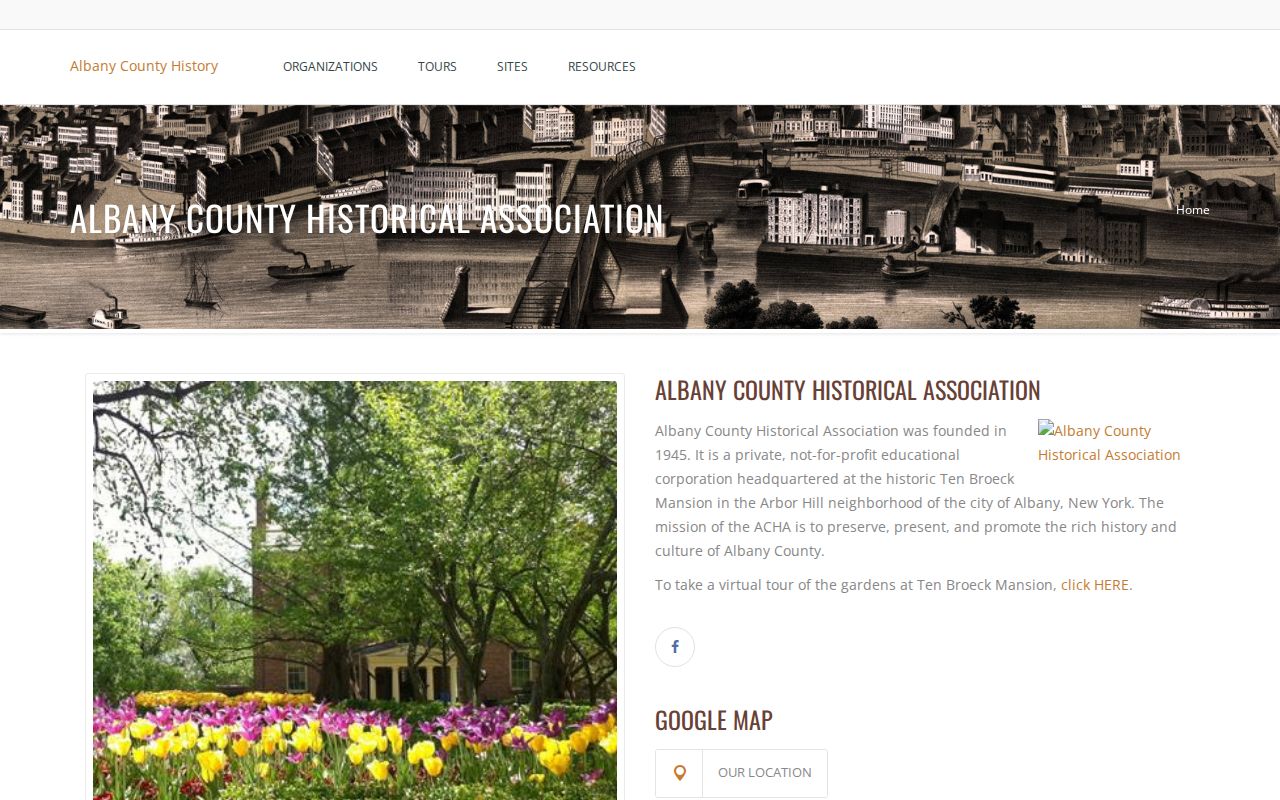
Use a historic-house or neighborhood collection to add context around a cited directory entry. Keep its holding institution and access conditions separate from APL and Hall of Records citations.